


I interviewed Filipino American author, Tracy Badua, who writes contemporary novels and contemporary novels with some sprinkling of fantasy for middle grade kids and young adults.
We started out talking about the difference between writing for middle grade and young adults, “Other than the age ranges, with the middle grade being more towards 8 through 12, and then young adult being teens and up, there are the themes, and then also I think primarily how your main characters would approach a problem. So obviously, how a younger kid would approach a problem would be different than how a teen would, of maybe an eight-year-old would naturally think of, ‘Oh, maybe I should go try and find an adult to help me solve this,’ where a teen would be like, ‘No way am I gonna go find Mom to do this. I’ll fix it, or I’ll find another way to do it.’ So, I think there’s not only a difference in approach but also maybe some of the problems that they’re facing. So, I know one of the kind of larger issues that middle grade or, that 8 to 12 range, they tend to try to find their place in groups. They tend to try to find their place in the school, in their world, in their friend groups, where when you’re teens, you’ve found your place, but maybe you’re trying to find your way to differentiate yourself or trying to find your unique self or try to strengthen who you are. So, there’s a little bit of a difference in some of the obstacles you’re facing, and some of the journeys you’re facing in what will become your story or what will become your book.”
We went on to discuss why she gravitates toward middle grade and young adult novels, Tracy replied, “I was initially drawn to [middle grade and young adult] because when I started writing, I was a full-time lawyer [encouraged by my Filipino grandmother], and that is very dry writing. And the problems you tackle as a full-time lawyer are very different than the problems you would tackle in a middle grade novel or a young adult novel. It’s so much more exciting and fresh and there’s a lot more cleverness you can weave into a middle grade novel or those middle grade problems or YA than you can into the lawyer writing. So, I think that’s why I was drawn initially to those age ranges, and I fell in love with writing those age ranges.”
As a Filipino American, close to her Filipino grandmother, Tracy includes a lot of Filipino folklore in her novels. She described, ”The reason that I put in the folklore is just because those are the stories that I grew up with, and that was a lot of the connection that I had to the Philippines. I was born and raised here, so a lot of these stories that I would hear would be through my grandmother or would be through various relatives. And it’s funny that the, the way those stories would come up would be through cautionary tales of ‘Don’t go over there. There’s a duende,’ Or, ‘Don’t do this because there is some sort of ghost,’ and I’d be like, ‘What are you talking about?’ And then they would explain this whole long folklore, whole long fairy tale about why X, Y, and Z happens. So those are the kinds of stories that stuck with me and eventually worked their way into my books.”
I then inquired if she believed the folklore, “I will say I don’t, but clearly they stuck with me all these years and just burrowed into my brain enough that they’re in my books. And I am still, I think, aware enough of ghost stories that I still don’t watch horror movies. I went on a ghost tour recently with a friend, and I still stayed really close to the group. I think in my head, I’m like, ‘Oh, of course these aren’t real,’ but in the back of my head, I’m like, ‘But what if? What if?’ I would hate to be the one person that realizes--Oh no, but they are real.”
In Tracy’s books, the first-generation immigrants tend to bring over the Filipino folklore. However, their kids are more likely to try to assimilate and reject the folklore. However, their kids, the grandkids, are more curious about the culture of their parents and their grandparents and are more accepting of and targeted by duwendes and ghosts.
Tracy notices intergenerational families are in all different cultures and therefore included intergenerational families living under one roof in several of her books.
We then addressed each of her books.
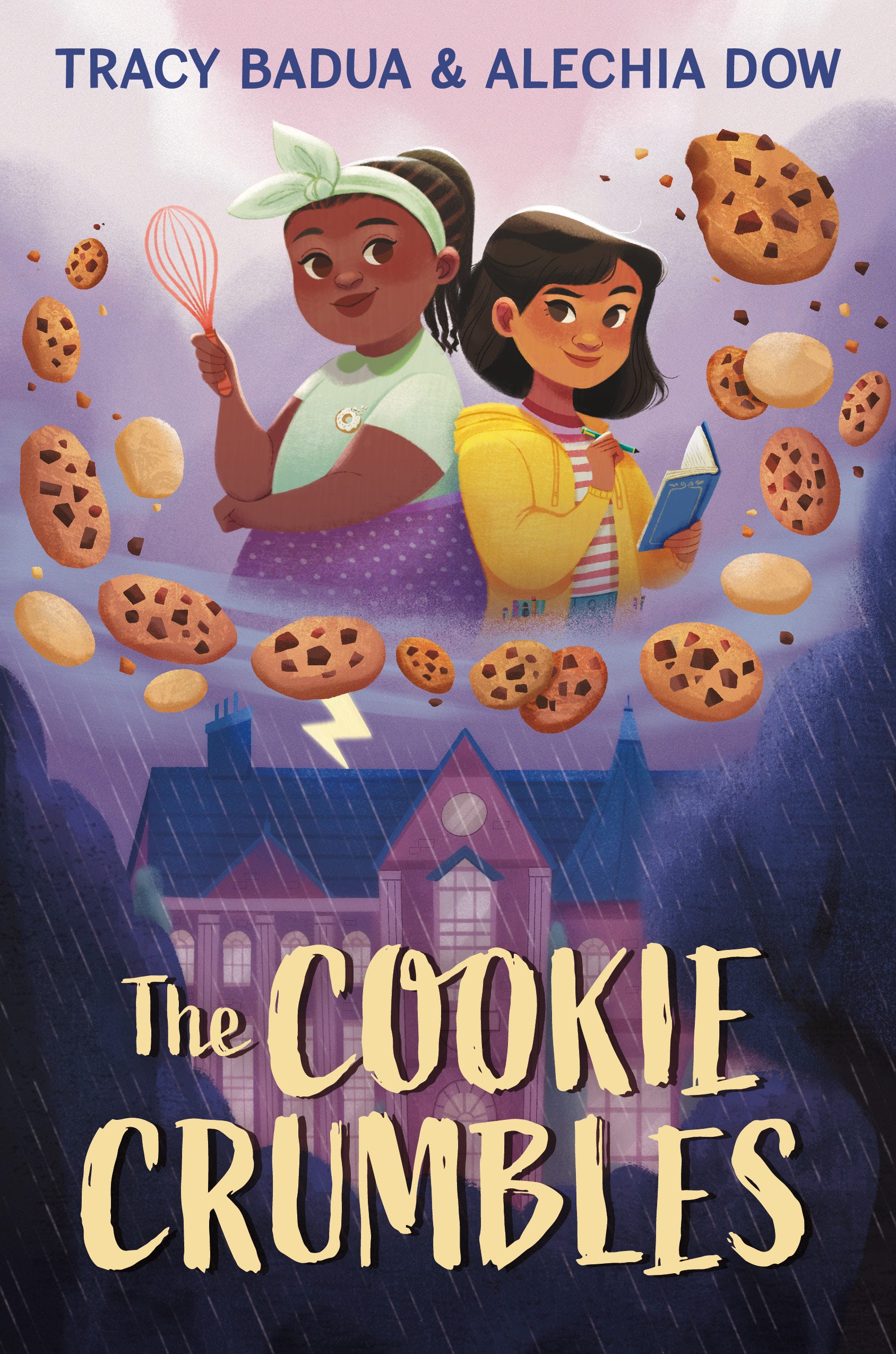
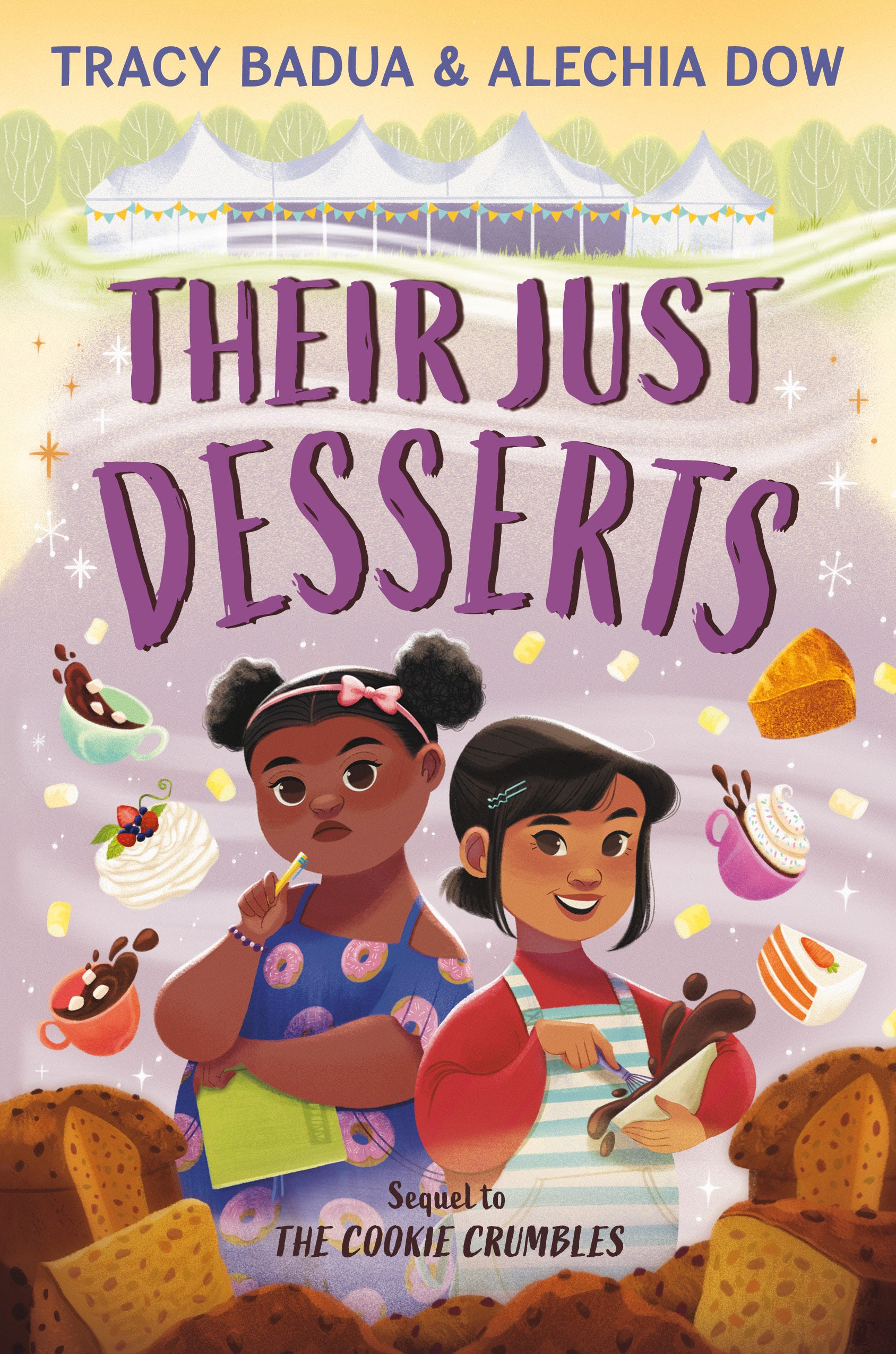
The Cookie Crumbles and Their Just Desserts
This pair of mysteries Tracy co-wrote with the “wonderful” Alicia Dow. They center around Lucy, a 12-year-old Filipino American journalist and Layla, a Black middle grade baker. The Cookie Crumbles is about an attempted murder at a baking competition at a boarding school, and Their Just Desserts is about the framing of a kid’s father at a kid’s holiday baking championship. Alicia, a pastry chef, wrote Layla’s chapters and Tracy wrote Lucy’s chapters, and they basically traded chapters back and forth, and it was like “hanging out with a friend via book-writing.”
Along with socioeconomically and racially diverse characters, they included queer characters. Tracy explained, ”we’ve included queer characters in The Cookie Crumbles and in Their Just Desserts just as a representation of what the world we live in is like. And it was more of just a this is how our community is, and to not include any queer characters is just not acknowledging what the world we live in is like.”
The friendships between Lucy and Layla are challenged by the “bad guys” but they found out that they were better off when they had each other’s backs.
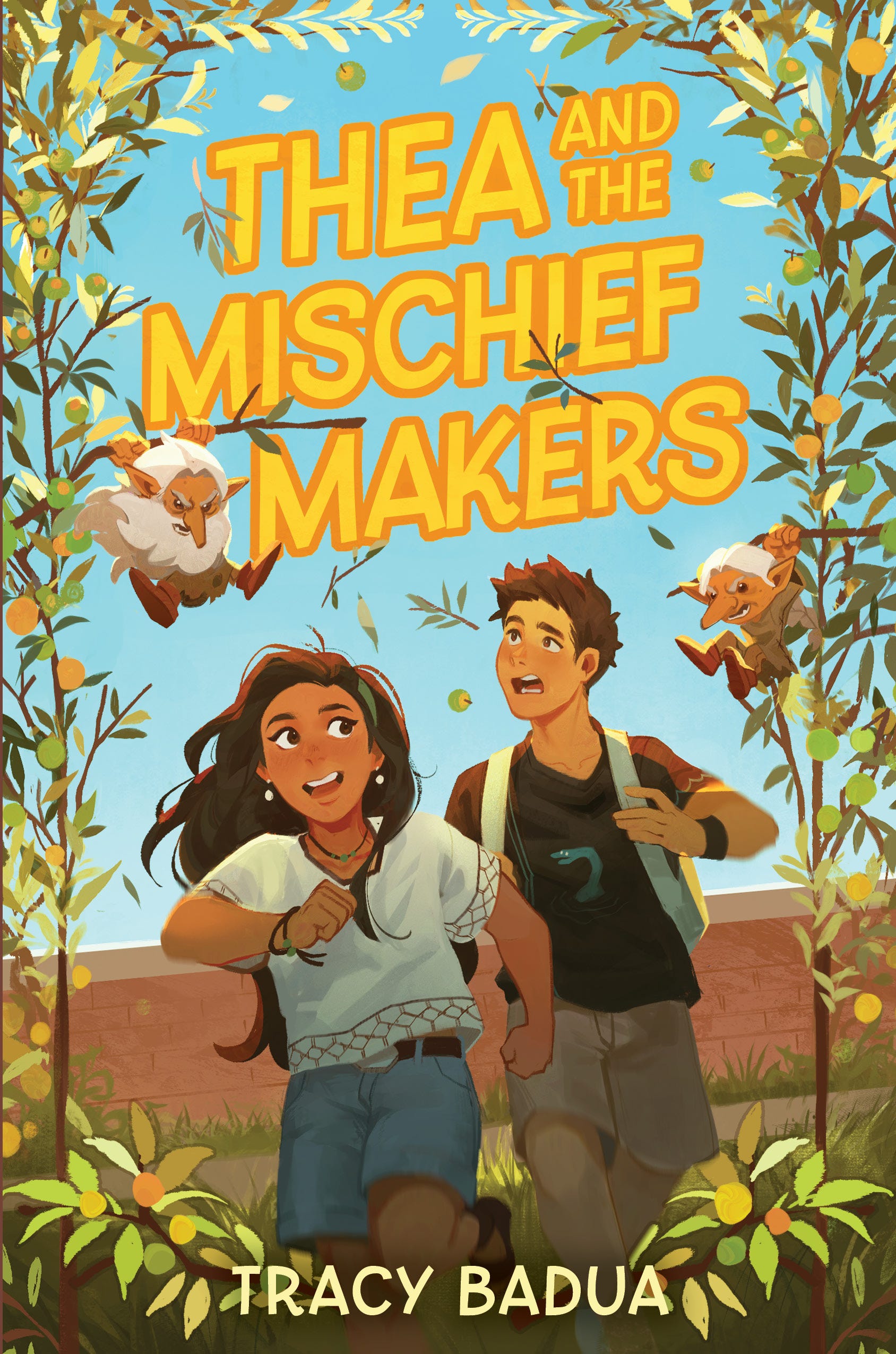
Thea and the Mischief Makers
Thea and the Mischief Makers features Thea, a superstar at Brazilian jujitsu leading to popularity who goes to a stunt warrior obstacle course summer camp. She realizes she’s not very good at it and she and her “uncool” friend, Evan, try to make an obstacle course in her backyard. They break a branch off of a tree inhabited by Filipino duwendes, which are these Filipino goblins who vow to destroy her entire neighborhood unless she can properly apologize and make appropriate amends in a restricted amount of time.
Technically, according to most Filipino folklore, duwendes are just mostly mischief makers. They steal shoes and steal car keys and move things around. But, for this book Tracy ramped it up what they want from Thea and because she wronged them, a pair of a brother and sister duendes are bent on revenge.
Thea struggles in the book between supporting Evan and risking her own coolness and being mean to him along with her other friends. It turns out that Evan is important in trying to help her satisfy the duwendes.
When asked what she thought it could teach middle graders Tracy replied, “ I think it could teach middle graders about finding your way, how to navigate all the different paths and being true to yourself. You’re going to be faced with a, maybe a lot of different friend groups, a lot of different kinds of friendships. And I think at the end of the day, you have to figure out, what feels best for you and what feels most fun to you and what makes you happy even if it doesn’t make you the most popular or the coolest kid.”
Interestingly, duwendes exist in lots of cultures around the globe. And, many people believe that they are real.
Freddie vs. the Family Curse and Ghoul Summer
Both these books featured ghosts tormenting middle grade kids.
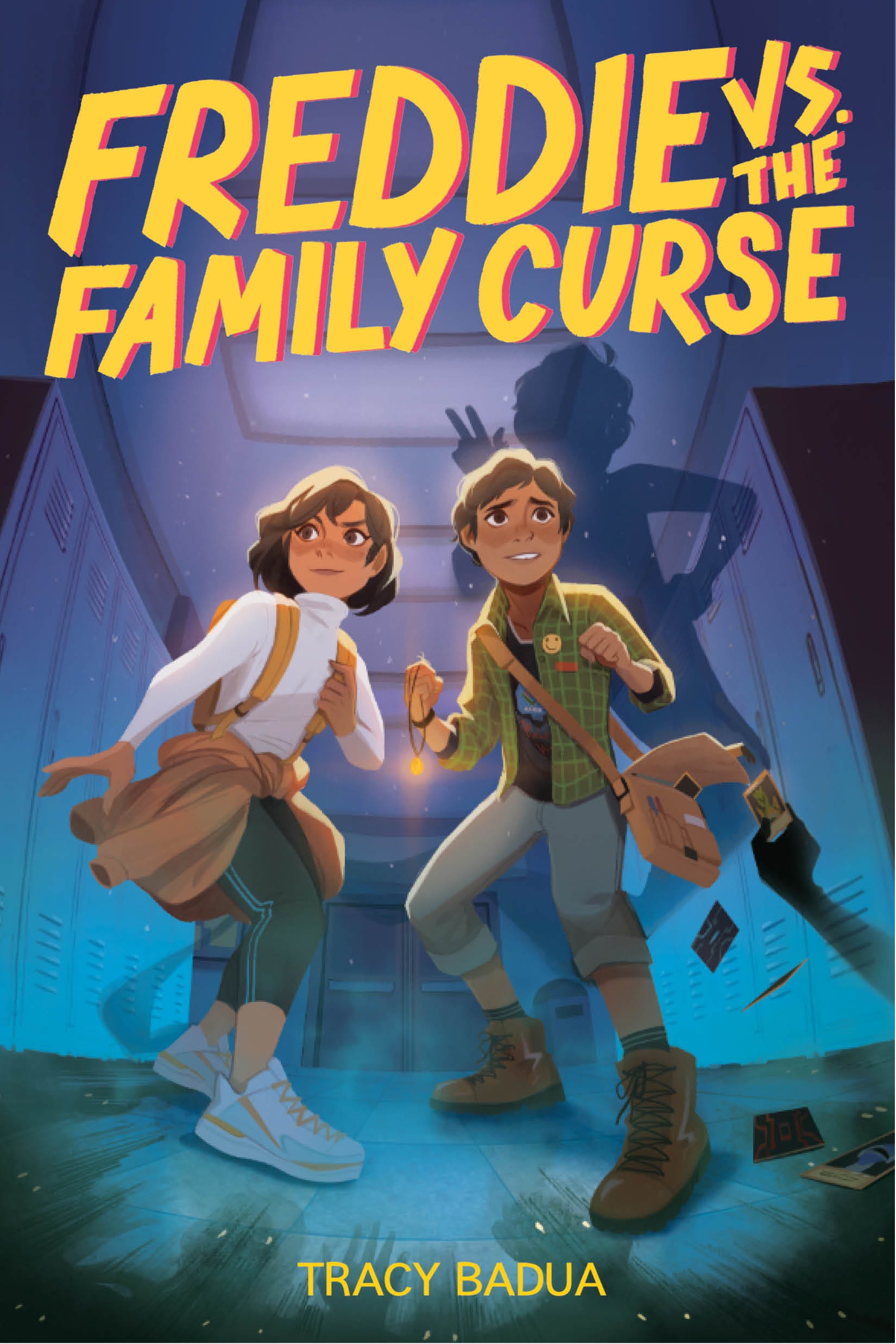
Freddie vs. the Family Curse
In Tracy’s words, “Poor 12-year-old Freddie, whose family is cursed with generations of bad luck, and he finds this amulet he thinks is gonna make everything better, but because writers are terrible people, it makes everything so much worse. And if he doesn’t find a way to return that amulet, he will, get sucked into it with the ghost of his World War II era great-granduncle.” The book began with Tracy’s learning about the honoring of Filipino World War II veterans and grew from there.
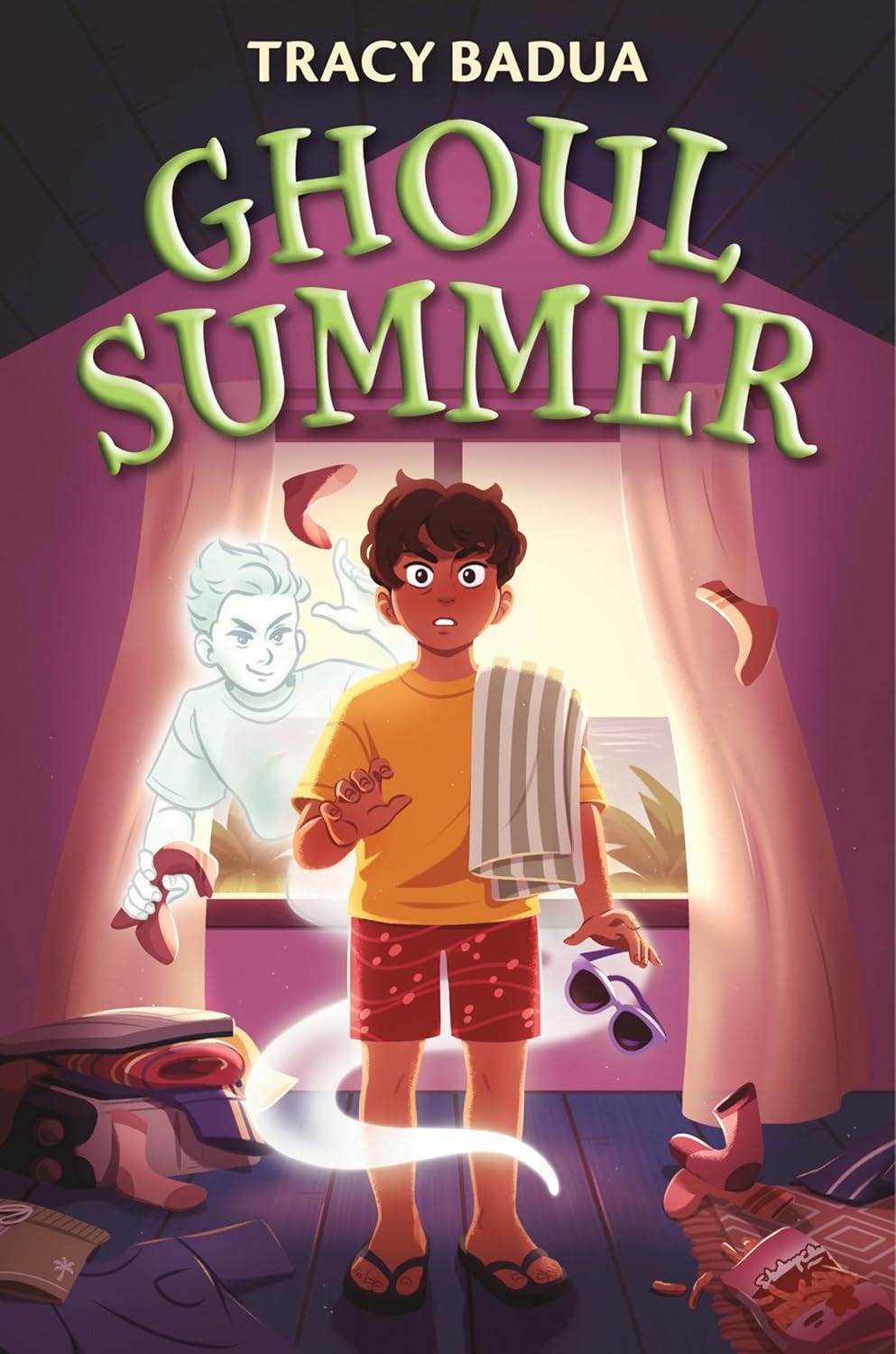
“With Ghoul Summer, we’ve got another ghost. This one has 12 year-old Barnaby, who is dragged away from the wonderful summer that he thought he was going to have with his friends, and he has to go to a sleepy beach town to help his grandfather move. The vacation rental that they have is haunted by a ghost that is demanding that Barnaby help him with his unfinished business, or he will hitch a ride home in Barnaby’s body. A lot of ghosts moving into places in both of these books.”
Although curses are not very common in Filipino folktales, ghosts are, usually “evil, spooky, out to get you ghosts.” Tracy, however, leaned toward having the ghosts have their own journey, not just hanging around wreaking havoc. Other superstitions included, not sweeping at night, which is a common superstition among Filipino Americans and other cultures even in the US. Although both were ghost stories, neither were meant to be over the top spooky and scary.
The Takeout
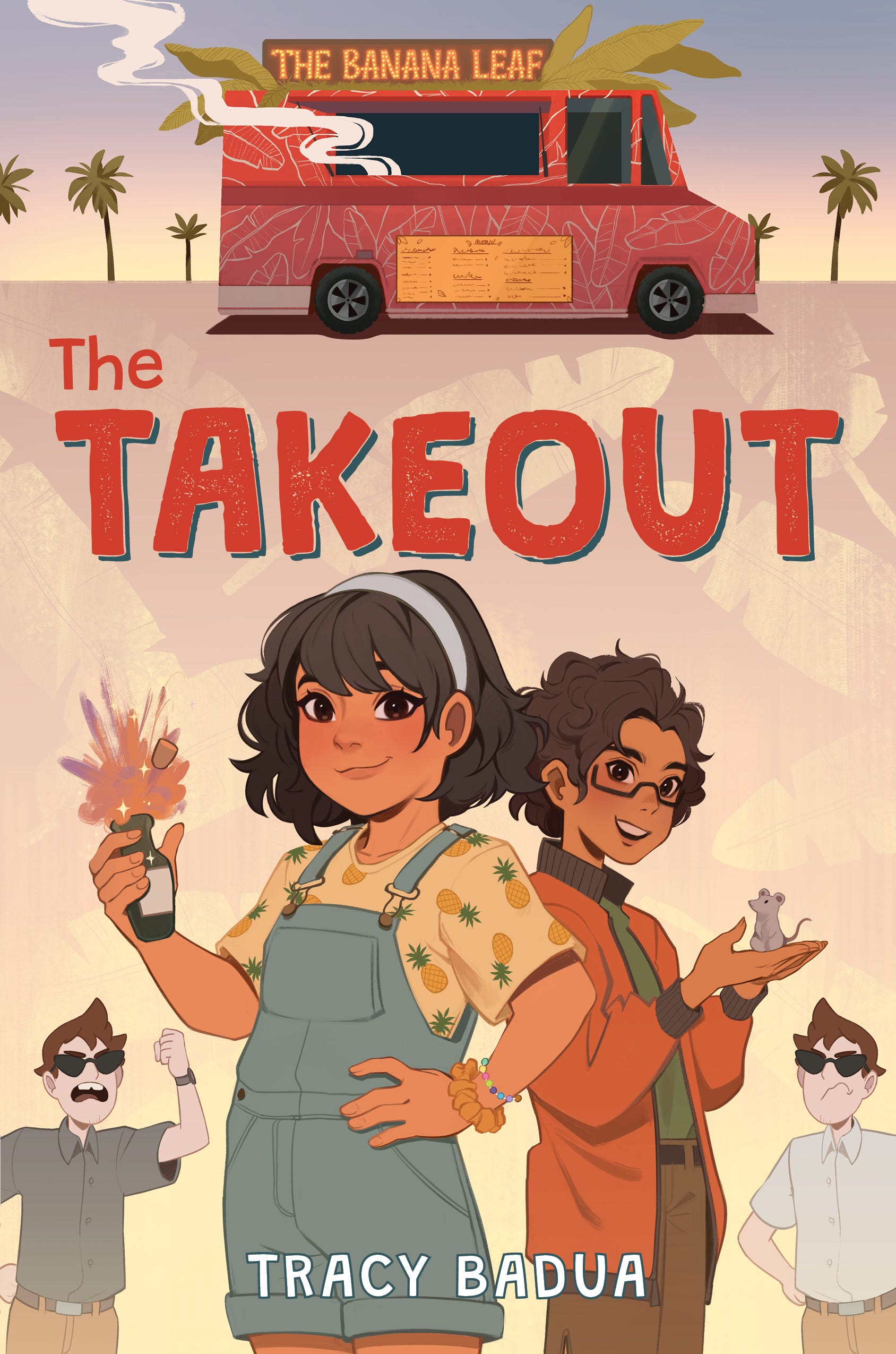
This book is about 12-year-old Mila, who is new to town, and her family owns a Filipino-Indian fusion food truck where she spends her spare time creating new recipes and helping out her father and his friend. Two celebrity twins, the Fab Foodie Brothers, move to town to open a restaurant with suspiciously similar recipes. In the course of Mila’s investigating, she has to decide whether it’s worth risking her new friendships with people in town, the cookie cutter Seashell Squad, and keep pushing forward or if she should just let go of the family business to salvage her friendships.
Mila is also exploring her friendship with Ajay, an Indian kid whose uncle is the partner with Mila’s dad running the food truck. Ajay, his pet rat, and Mila try to expose the Fab Foodie Brothers before they destroy the family’s food truck.
Mila is struggling with the dual identity of being Filipino and rather than being immersed she learns in bits and pieces from her grandmother and her older sister. Tracy wants to make the point that it’s okay to be where you are. I find this so often in books whose authors I’ve interviewed with kids that have immigrant culture in their background and are trying to fit into mainstream white American culture.
Interestingly, the foods in the Filipino and Indian fusion food truck, although convincing, are all made up.
This is Not a Personal Statement
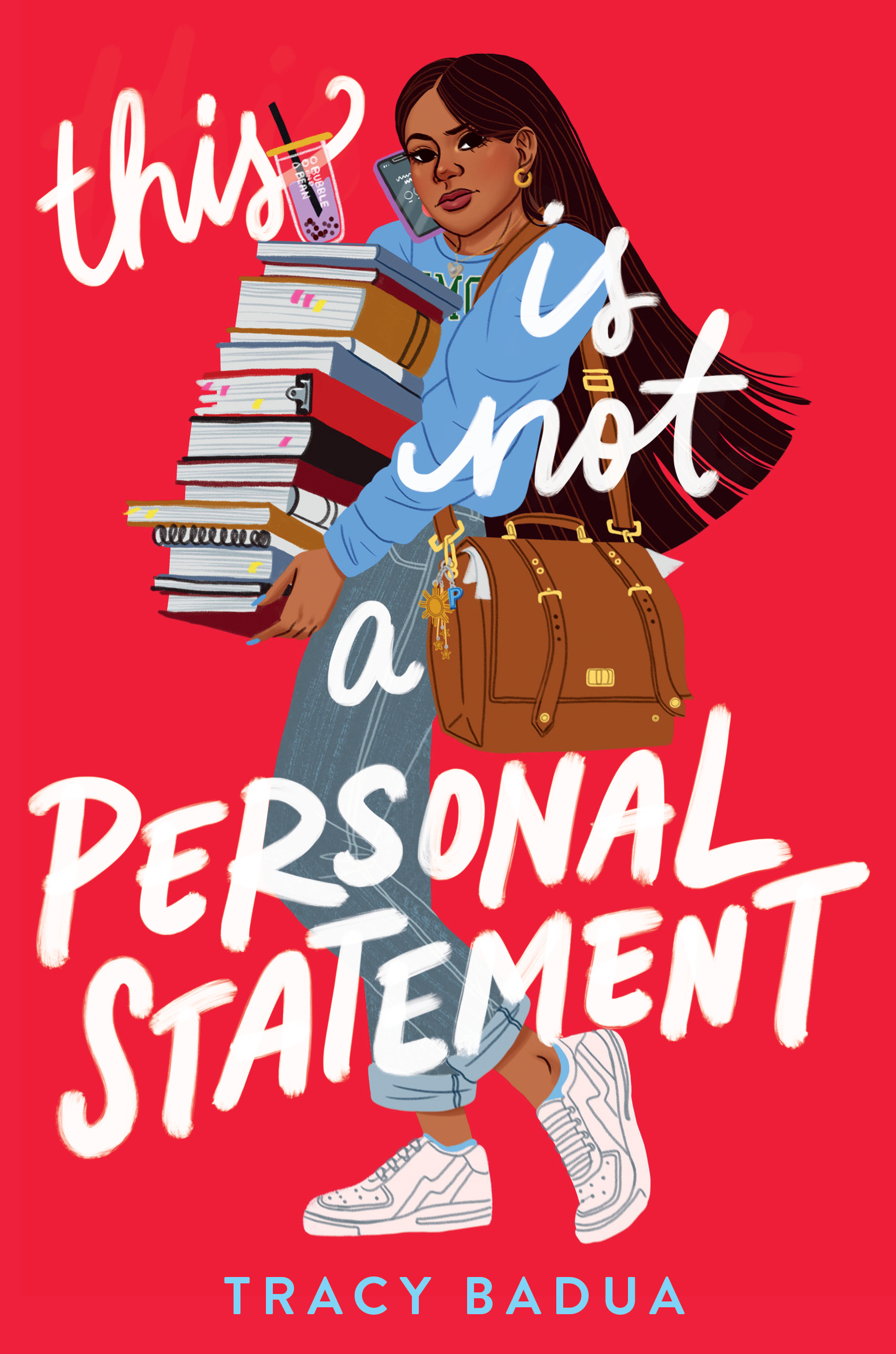
This YA novel features a 16-year-old girl, Perla, who does not get into her dream college, photoshops an acceptance letter, and shows up on campus anyway. Tracy adds a quick disclaimer stating, “This is fiction, not a how-to guide.”
Tracy believes that like when she was a kid, the kids are still under a lot of college pressure with the added pressure of things like opening acceptance letters on Tic Toc bringing acceptances and rejections beyond the kids’ local communities.
She identified the larger East Asian cultures as pressuring kids to become doctors, lawyers and engineers. She’s gotten a lot of feedback indicating how much the stress Perla feels resonates with young people. She’s even found that people have done what Perla did in real life.
Perla’s anxiety fuels the pressure she puts on herself. It changes the perspective she might otherwise have had.
Back to Tracy
Tracy said she has a couple of middle grade manuscripts out for submission and she’s working on some YA as well.
When asked what she recommends aspiring authors to do she said, “Find community… Just finding other folks who are like-minded and interested in the business of writing and publishing. Finding folks is important because there are so many specific things about your writing journey that other folks won’t understand. When you’re complaining about things of “Oh, I’m on sub,” or, “I’m querying,” other folks won’t understand you. Or even when you’re like, “Oh, blah, blah, blah, rough drafts,” or, “I’m not sure if I’m done yet,” where like other people will be like you typed the end, you are done.” You’ll be like, “No, I have to revise this 1,000 more times.” Just find your community. I think you will grow faster as a writer as part of a community than you would alone.”
I thoroughly enjoyed my conversation with Tracy and all of her wonderful books, and I hope you do as well.
You can find the full interview at: https://www.buzzsprout.com/1012396 or by going to my website Mindful, Happy Kids: Embracing DEI and clicking the “podcast” link.
Please like and subscribe to make others aware of this podcast.